
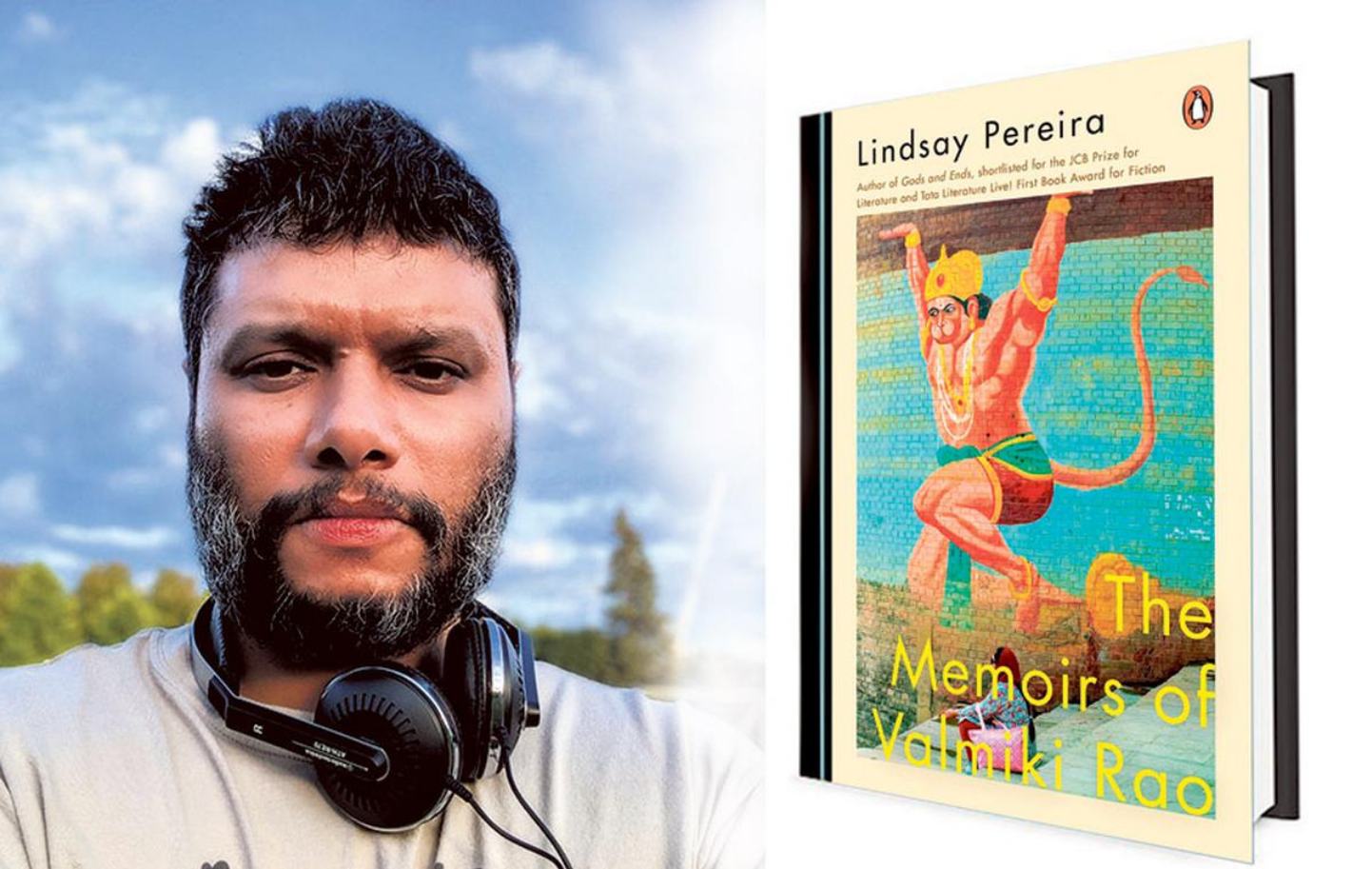
What happens when you appreciate the story but not the storyteller? When a narrative boasts all the elements of a thriller—a gripping plot, a diverse cast, intense action, and clear political undertones—but the narrator embodies the stereotype of a middle-aged Indian man who believes his voice supersedes all others? Lindsay Pereira’s “The Memoirs of Valmiki Rao” (Penguin, Rs 599) presents such a dilemma, retelling the Hindu epic Ramayana set against the backdrop of 1992-1993 Mumbai during the Babri Masjid demolition.
The initial half of the novel effectively establishes its premise: Valmiki Rao, a retired postman, mourns the decline of his chawl and its residents, particularly Ramu, whose descent into bigotry, complacency, and poverty deeply troubles him. Rao chronicles the escalating communal violence in Mumbai, fueled by political factions like the Vishwa Hindu Parishad, Shiv Sena, and Bajrang Dal, which exploit underprivileged youth to incite riots. Amidst this turmoil, Rao reminisces about Janaki, his beloved from days past, while condemning the pervasive misery surrounding him.
Rao’s grumpy and irritable demeanor effectively matches the bleak mood of the narrative. His memoir paints a grim picture, rarely punctuated by moments of light, capturing the despair and chaos within the chawl where the story unfolds. Educated and rational compared to his neighbors, Rao disdains domestic violence, unruly children, and corrupt police officers. His isolation and regret over forsaking family life further fuel his conviction that he alone comprehends the truth. Like many storytellers enamored with their own narrative, he assumes authority.
However, the novel’s second half overstays its welcome with excessive action scenes, burdening the story with clichéd dialogues and repetitive exposition from various viewpoints. What started with poignant character moments in the first half—such as Ramu’s familial struggles and personal growth—gives way to a more formulaic action-adventure narrative surrounding the Babri Masjid’s demolition. Despite moments of insight, like Rao’s astute observations on societal decay, the narrative falters under the weight of its own verbosity and theatrical speeches.
The central theme of the Babri Masjid demolition provides a compelling backdrop, with Rao serving as a keen observer abandoned by society yet acutely aware of his role within it. His reflections offer poignant commentary: “Buildings don’t always fall on their own; they are nudged at and nibbled away, sometimes from within by people who don’t want them replaced with clear skies.” However, the novel’s self-indulgent tendencies, typified by Rao’s self-pity and didacticism, occasionally overshadow its narrative strengths.
Despite these shortcomings, the sheer force of the narrative remains compelling. While Rao’s likeability remains ambiguous throughout, it doesn’t detract significantly from the novel’s narrative potency. Ultimately, while a self-pitying narrator may not appeal to every reader, Rao’s perspective acknowledges societal wounds and the imperative for change—a reflection that, despite its flaws, resonates with the novel’s broader themes.